Training
Kids Boxing at Home: How to Hold Pads for Your Child
How to hold boxing pads for your child at home, from safe pad height and first combinations to a 20 minute session, with the junior kit to buy in the UAE.
6 min read
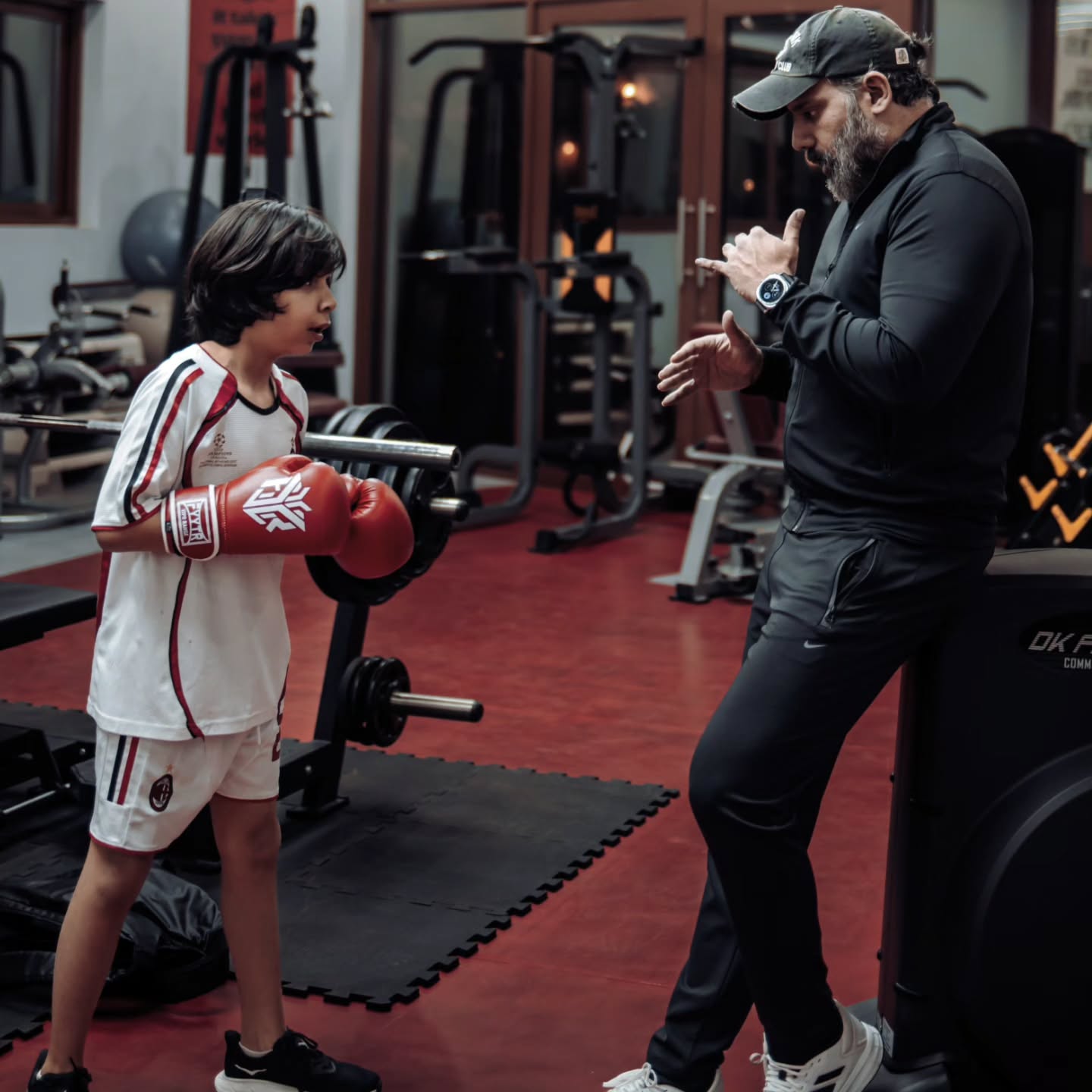
Kids boxing at home works best as pad practice with a parent: your child wears wraps and small gloves, you kneel to bring a pair of focus pads to their shoulder height, and you call the punches their coach has already taught them. Twenty minutes, short rounds, no contact to anyone's head. That is a session most children love and most parents can run safely from the first week.
What follows is how to hold the pads, what to call, how to structure a session in a UAE living room, and the small amount of kit it needs.
Can kids practise boxing safely at home?
Yes, as long as home is for practice and the club is for learning.
A good junior class, as described in kids boxing in the UAE, is mostly footwork, coordination, shadow boxing and pad work, with no head contact for young beginners. Home sessions should look exactly like that, only smaller. Your child repeats the punches and combinations their coach has shown them, on pads you hold, at a pace you control.
What does not belong at home is anything a coach would supervise closely: new technique you are guessing at, defence drills where you throw punches back, and any form of sparring, even play sparring with a sibling. Those need a trained eye, a proper floor and the right protective kit.
There is also a simple reason to bother. The WHO recommends that children and teenagers get at least 60 minutes of moderate to vigorous activity a day, and a pad session after school is one of the more enjoyable ways to cover part of it, especially in summer when the park is not an option.
How to hold boxing pads for a child
Most of the skill in pad work belongs to the person holding. Get these five things right and the session takes care of itself.
- Get down to their height. Kneel on one knee or crouch so the pads sit at your child's shoulder height. Adults standing tall hold pads far too high, and the child learns to punch upwards with a dropped guard.
- Keep the pads close. Hold them a short distance in front of your shoulders, not at arm's length. Pads held far out are wobbly targets and pull the child off balance as they reach.
- Face the pad to the punch. For a jab, the pad opposite your child's lead hand faces it straight on. A pad angled away makes the glove skid off it, which is how wrists get bent.
- Meet the punch, gently. Give each punch a small push forward as it lands, so it hits something firm. Do not swing the pad into the glove and do not let it fly back loose.
- Never hit back. Coaches sometimes return a slow shot so a boxer can practise defence. At home, with a child, the pads only ever receive.
A useful habit: show the pad, call the punch, and only then expect it. Children who are guessing which pad to hit will wind up and swing. Children who know what is coming throw clean punches.
What to call: first combinations for kids
Stick to the punch numbers your child's club uses. Most gyms call the jab 1 and the cross 2, and the rest of the system is in boxing combinations for beginners.
For the first weeks at home, three calls are enough:
- 1. A single jab. Watch that the hand comes straight back to the face.
- 1 2. Jab, cross. Watch that the back foot turns on the cross.
- 1 1 2. Double jab, cross. The first jab finds the distance, the second sets up the cross.
Only add hooks if the coach has already taught them, and hold the pad for a hook turned inward, facing the glove as it comes round. If your child's hook looks like a wild swing, go back to straight punches. Speed and accuracy matter far more than power at this age, and a fast, clean 1 2 is something to be properly proud of.
Mix in the calls they find funny - "touch the pad", "double double" - because a child who is laughing is a child who wants a second round tomorrow.
A 20 minute kids boxing session at home
Short rounds with real rest keep form clean and attention high. This plan fits in a cleared space about the size of a rug.
| Part | Time | What happens |
|---|---|---|
| Warm-up | 4 minutes | Skipping (or pretend skipping), arm circles, jogging on the spot, slow shadow boxing |
| Wraps and gloves | 2 minutes | Wrap the hands, gloves on, check the fit |
| Pad rounds | 3 to 5 rounds of 1 minute | Calls from the list above, 1 minute rest between rounds |
| Fun round | 1 minute | Fast taps on whichever pad you show, light and quick |
| Cool-down | 3 minutes | Shadow boxing at half speed, stretching, water |
Clear away furniture with sharp corners, and avoid slippery tiles: a rubber gym mat or a rug that does not slide is ideal. Trainers with grip are better than socks.
Stop the session early if the punches turn into slaps, the guard drops and stays down, or your child says their hand or wrist hurts. Ending on a good round matters more than finishing the plan. In the hotter months, keep sessions indoors in an air-conditioned room and have water within reach.
What kit does a child need for boxing at home?
Very little, but it has to fit. Everything below, in the sizes that fit children, is gathered on our junior boxing kit page.
Hand wraps. Your child's own pair, since wraps sit against the skin and absorb sweat. Laaf hand wraps in 250 cm are AED 49 and are the length for small hands; an adult length leaves a child's hand too bulky for the glove. Wrapping takes practice, and their coach will usually teach it early on.
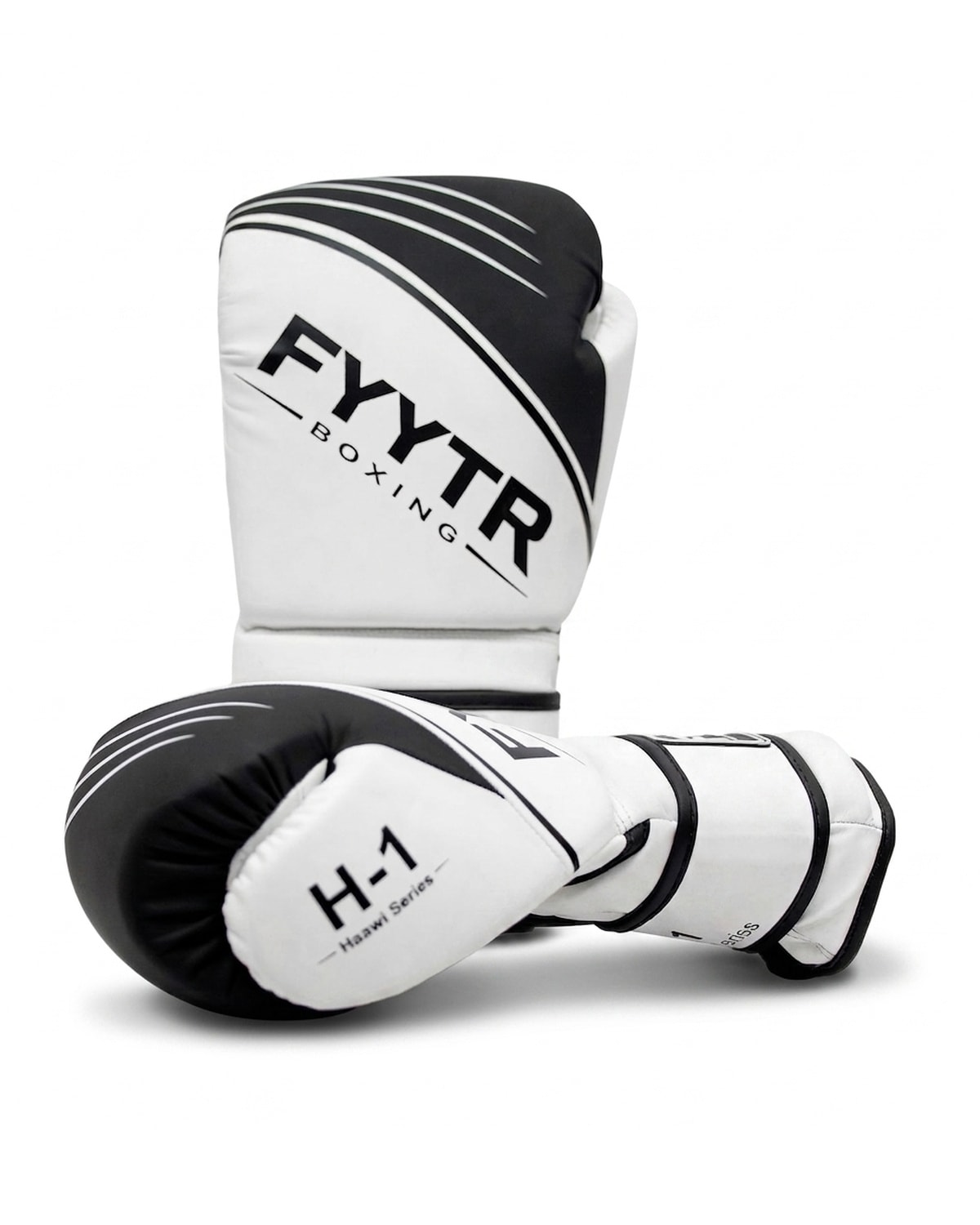
Gloves. Small, snug and worn over wraps. The Haawi H-1 in 8 oz is AED 249 and fits most children from about eight to twelve. Over wraps, the fingers should reach the end of the glove without pressing into it, and the wrist should stay straight when the child makes a fist. For younger children, ask the club which glove weight its junior classes use. Gloves and wraps bought together save AED 10 at checkout.
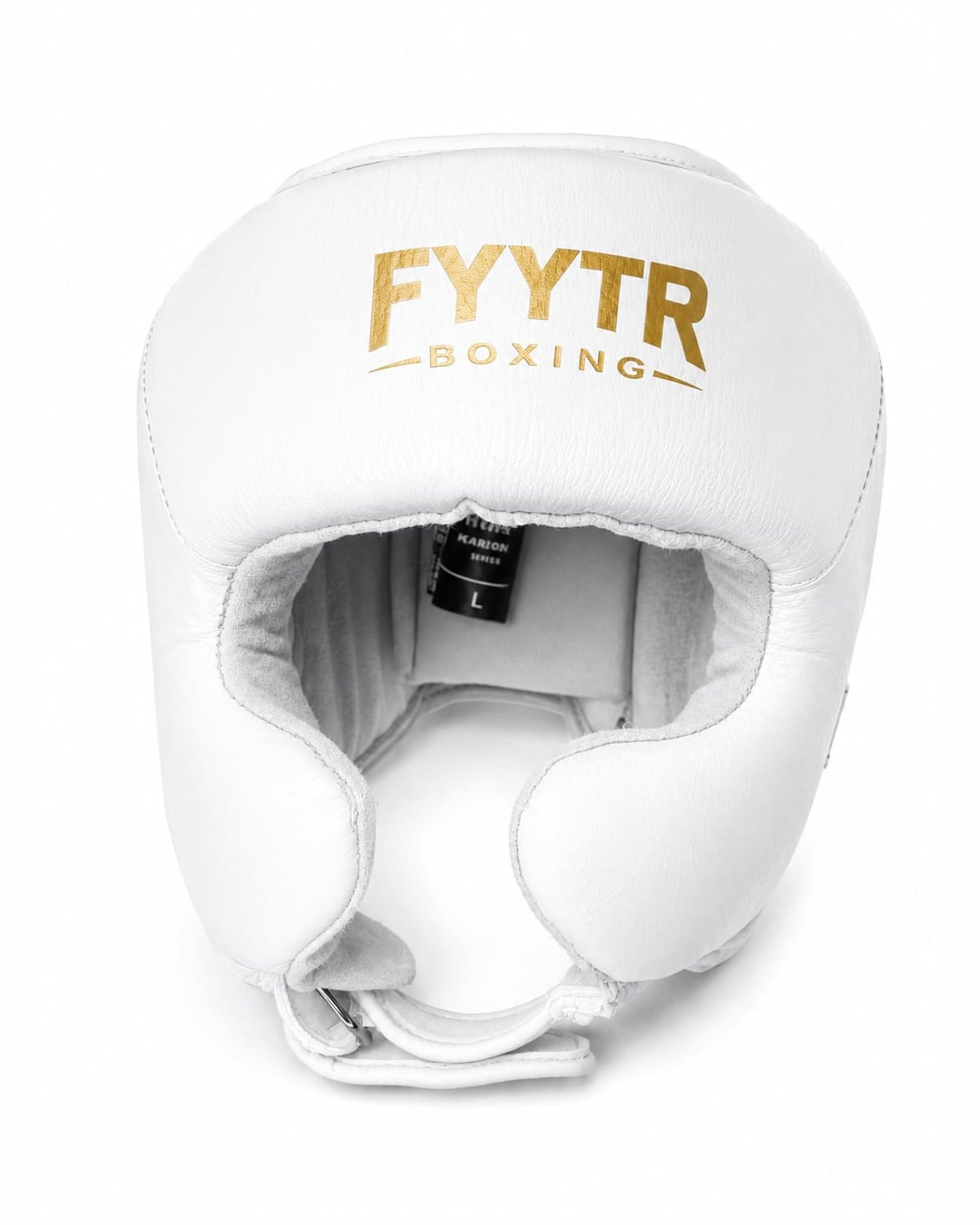
No headguard needed at home. Nobody's head is being punched, so it is not part of home pad work. It comes in only when a coach starts supervised sparring at the club.
Focus pads or paddles for parents?
Both work, and the choice is about you rather than your child.
Murabbi Pro Trainer focus pads at AED 189 are the classic choice. The curved face catches the punch and the padding absorbs it, so they are forgiving for a parent learning to hold and they keep up as your child grows stronger. If you buy one thing, buy these.
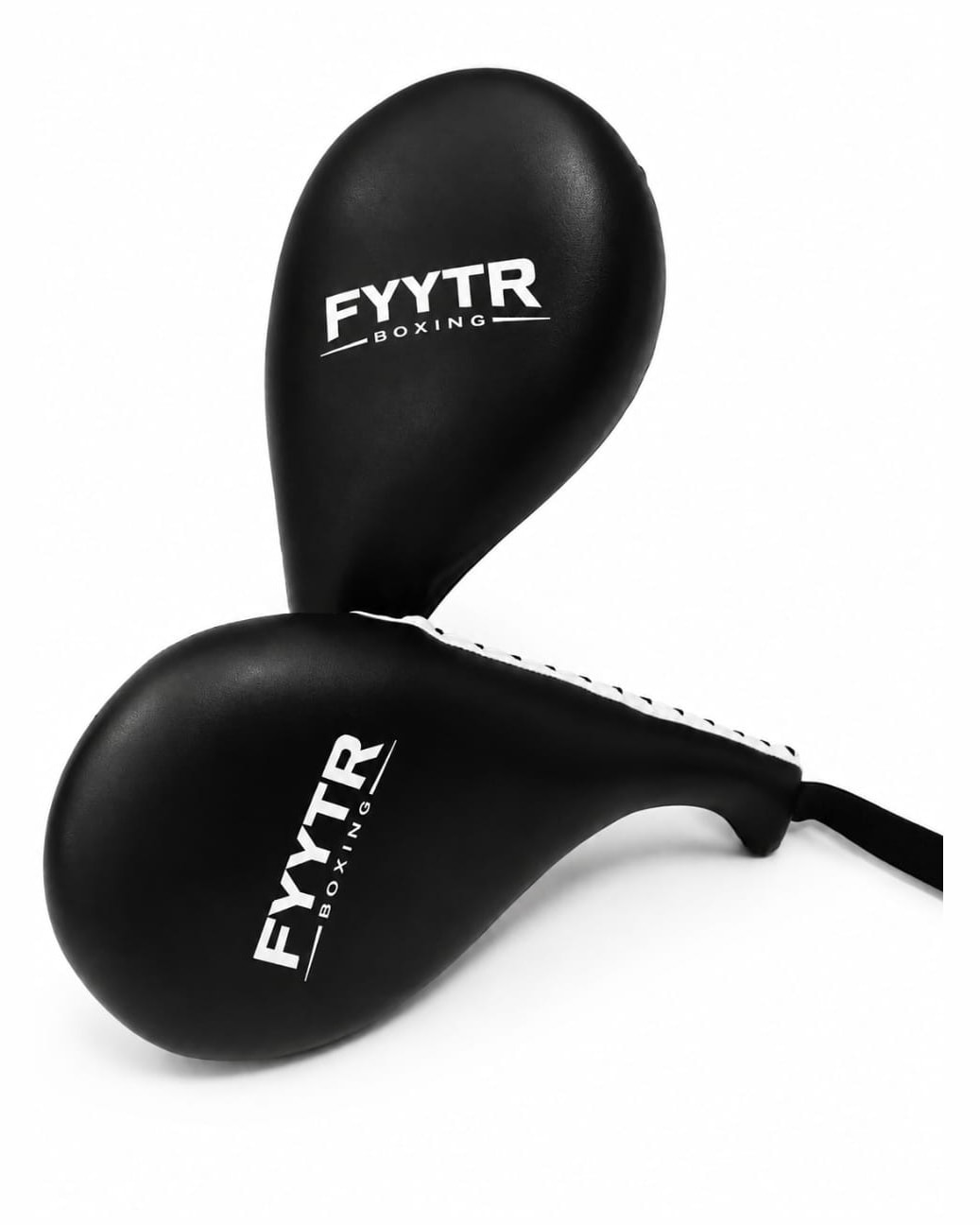
Murabbi coaching paddles at AED 199 are lighter and quicker to move, which makes them good for accuracy games: show the paddle, take it away, show the other one. They suit short, fast rounds and parents who find mitts tiring to hold up.
Either way, the pads are for the adult's hands. The child only ever wears their own gloves.
A complete home set - 8 oz gloves, 250 cm wraps and a pair of focus pads - comes to AED 477 after the gloves and wraps saving, and ships free anywhere in the UAE.
When to leave it to the club
Home pad work is a supplement, not a replacement. If your child is not yet in a class, start there: a coach teaches the stance and punches properly, and home practice then reinforces the right habits rather than the wrong ones. If they are already training, ask the coach what they would like practised at home this month. Most coaches are delighted to be asked.
And keep it light. The children who stay in boxing are usually the ones for whom it stayed fun, and twenty minutes on the pads with a parent is often the best part of their week.
Common questions
You can help them practise what their coach teaches - stance, the jab, the cross and simple combinations on pads. Leave new technique, defence and anything with contact to the club, where a coach can correct and supervise.
Kneel or crouch so the pads sit at your child's shoulder height, keep them close to your body and facing the punch, and meet each punch with a small push forward. Never swing the pads at your child or hit back.
About 20 minutes is plenty - a warm-up, three to five short rounds of pad work with a rest between each, and a cool-down. Stop earlier if technique falls apart or your child is tired.
Their own hand wraps and a pair of small training gloves, such as the 8 oz Haawi H-1 for many children from about eight to twelve. The adult needs focus pads or paddles. A headguard is not needed, because there is no contact to the head.
Shop the kit


Keep reading
Training4 min read
Starting Boxing in Dubai: Your First 30 Days
A week by week guide to starting boxing in Dubai, from picking a gym and a trial class to what to buy, what it costs and how to handle the heat.
Training3 min read
Amateur Boxing Kit: What to Bring to a Bout
What to pack for your first amateur boxing bout in the UAE, what the show usually supplies, what has to be yours, and what to confirm before fight day.
Training5 min read
Kids Boxing in the UAE: Age, Classes and Kit
When children can start boxing, what a good junior class in Dubai or Abu Dhabi looks like, and the small, well-fitted kit that keeps young hands and heads safe.