Technique
Boxing Combinations for Beginners: The Punch Numbers
The six punch numbers boxing coaches call, the first combinations to learn, how to drill them shadow boxing and on pads, and the mistakes that slow beginners.
4 min read

Boxing coaches number the six basic punches: 1 is the jab, 2 the cross, 3 the lead hook, 4 the rear hook, 5 the lead uppercut and 6 the rear uppercut. A combination is just a string of those numbers, and the first ones every beginner learns are the 1 2, the 1 1 2 and the 1 2 3.
Learning the numbers is what lets a coach call a combination mid-round and have you throw it without thinking. Some gyms number the uppercuts differently, so confirm with your coach in the first session.
What are the six punch numbers in boxing?
The system below is the one most gyms use. It assumes an orthodox stance, left foot forward. For a southpaw, the numbers stay the same and the hands swap.
| Number | Punch | Orthodox hand | What it does |
|---|---|---|---|
| 1 | Jab | Left | Measures distance, sets up everything |
| 2 | Cross | Right | Straight power down the middle |
| 3 | Lead hook | Left | Short, curved, from the side |
| 4 | Rear hook | Right | Heavier hook, longer to land |
| 5 | Lead uppercut | Left | Rising punch at close range |
| 6 | Rear uppercut | Right | Power uppercut at close range |
The odd numbers are thrown with the lead hand and the even numbers with the rear hand. That simple pattern is useful, because it means a good combination usually alternates odd and even numbers, which keeps you balanced.
What are the first boxing combinations to learn?
Six combinations cover most of what a beginner needs in their first months.
- 1 2. Jab, cross. The foundation of everything else.
- 1 1 2. Double jab, cross. The first jab finds range, the second hides the cross.
- 1 2 3. Jab, cross, lead hook. Straight, straight, then around the guard.
- 1 2 3 2. The same, finished with a second cross as the guard opens.
- 1 6 3 2. Jab, rear uppercut, lead hook, cross. Your first inside combination.
- 3 2. Lead hook, cross. Short, sharp, and useful when an opponent crowds you.
Learn them in that order and do not move on until the one before is clean. Clean means your hands return to your face after every punch and your feet never cross.
How do you practise combinations without a partner?
Shadow boxing, in front of a mirror, in timed rounds.
Set a timer for three minute rounds with one minute of rest. In the first round, throw only the 1 2, slowly, watching that your back heel turns on the cross and your jab hand comes straight back. In the second round, add the 1 1 2. Build one combination per round until you are running all six.
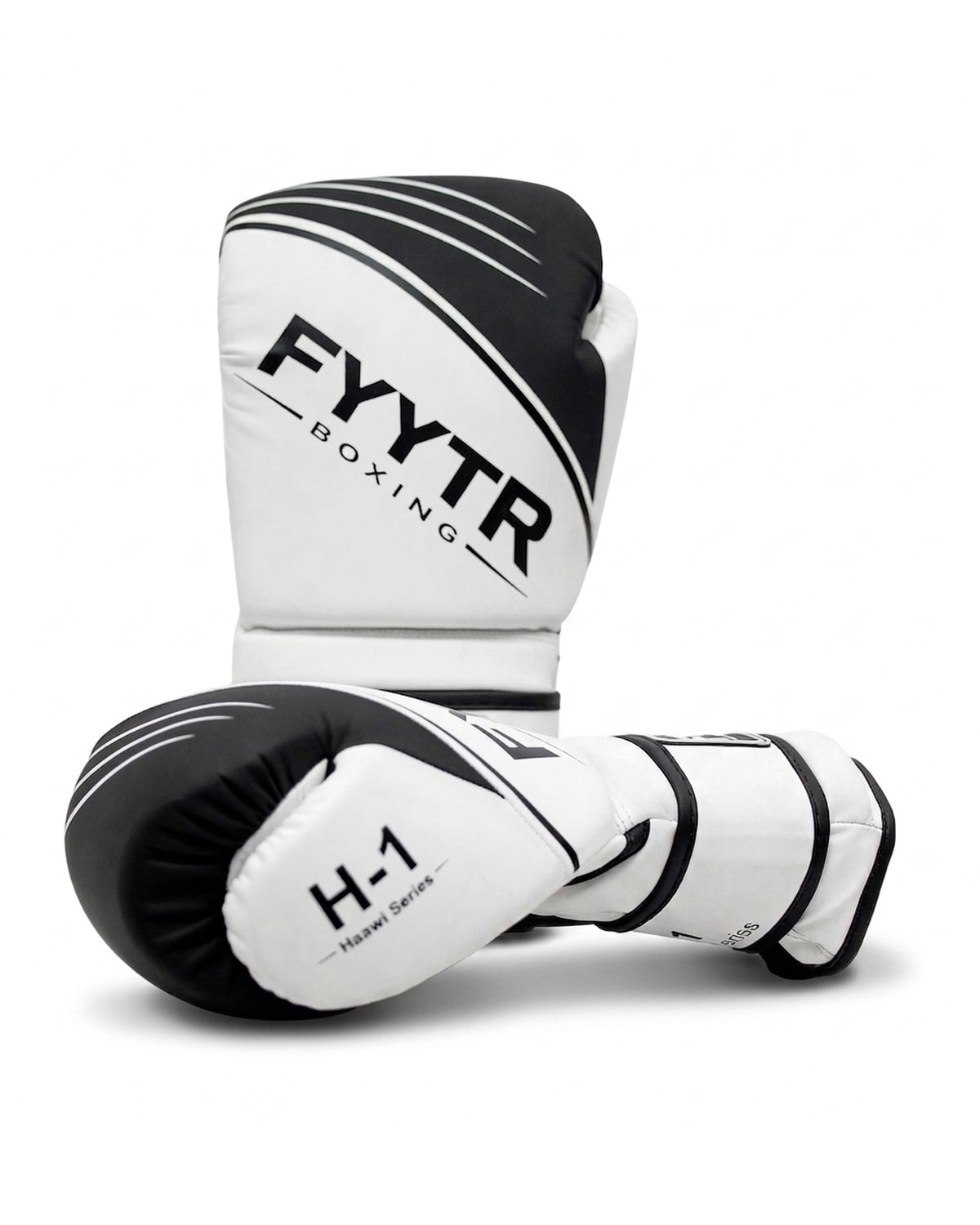
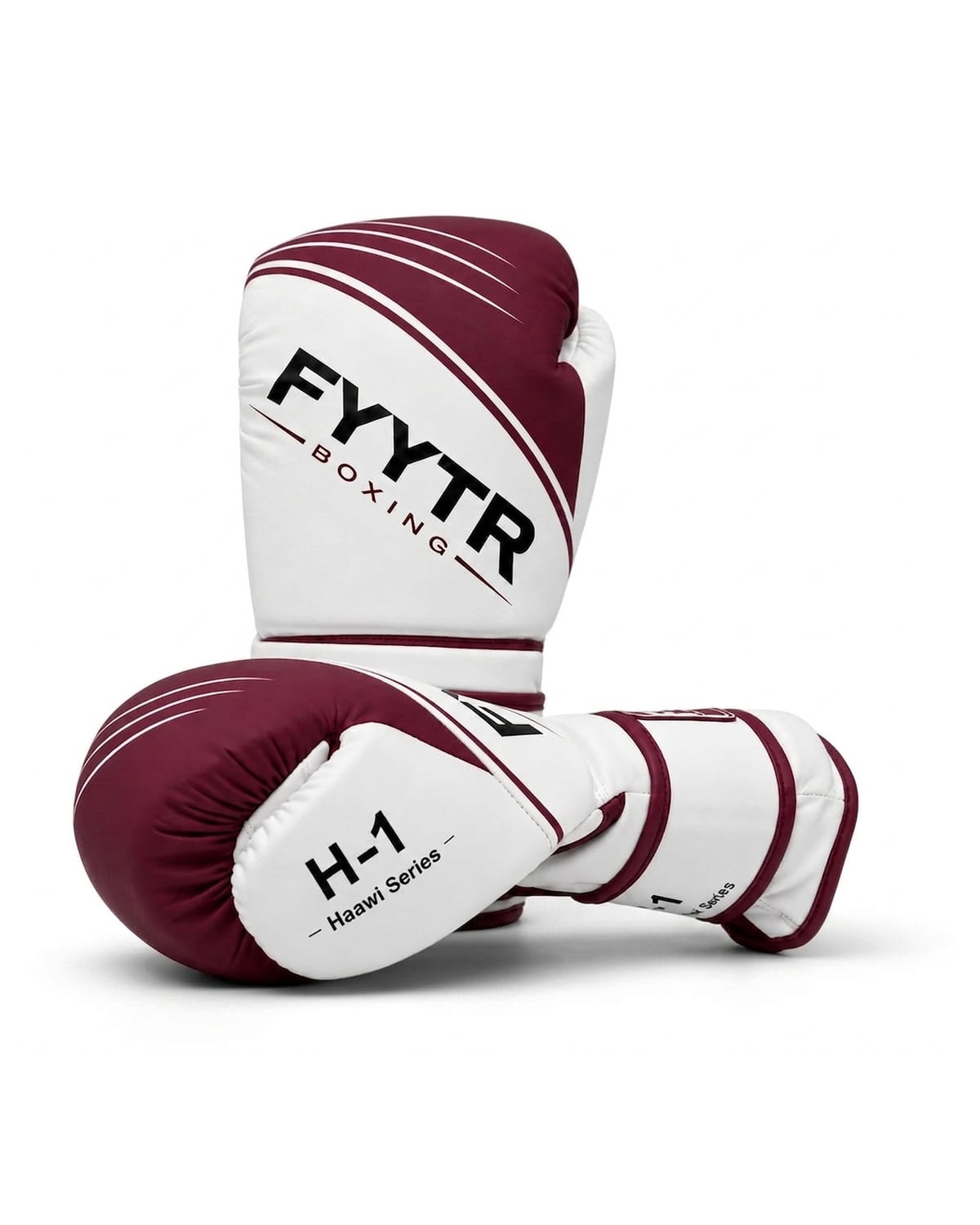
The mirror is the coach you have at home. It will show you a dropped rear hand long before you feel it. When you start hitting something, wear Laaf hand wraps, AED 49, and a training glove such as the Haawi H-1 at AED 299 in 14oz. A full home routine is in how to train boxing at home, and the footwork underneath every combination is in boxing footwork drills you can do anywhere.
How do you drill combinations on focus pads?
With a partner calling the numbers and moving the pads.
Pad work is where combinations stop being shapes and start being timing. The holder calls a number sequence, shows the pads in the right positions, and you throw. A good holder also moves, so you learn to throw combinations while stepping rather than standing still.
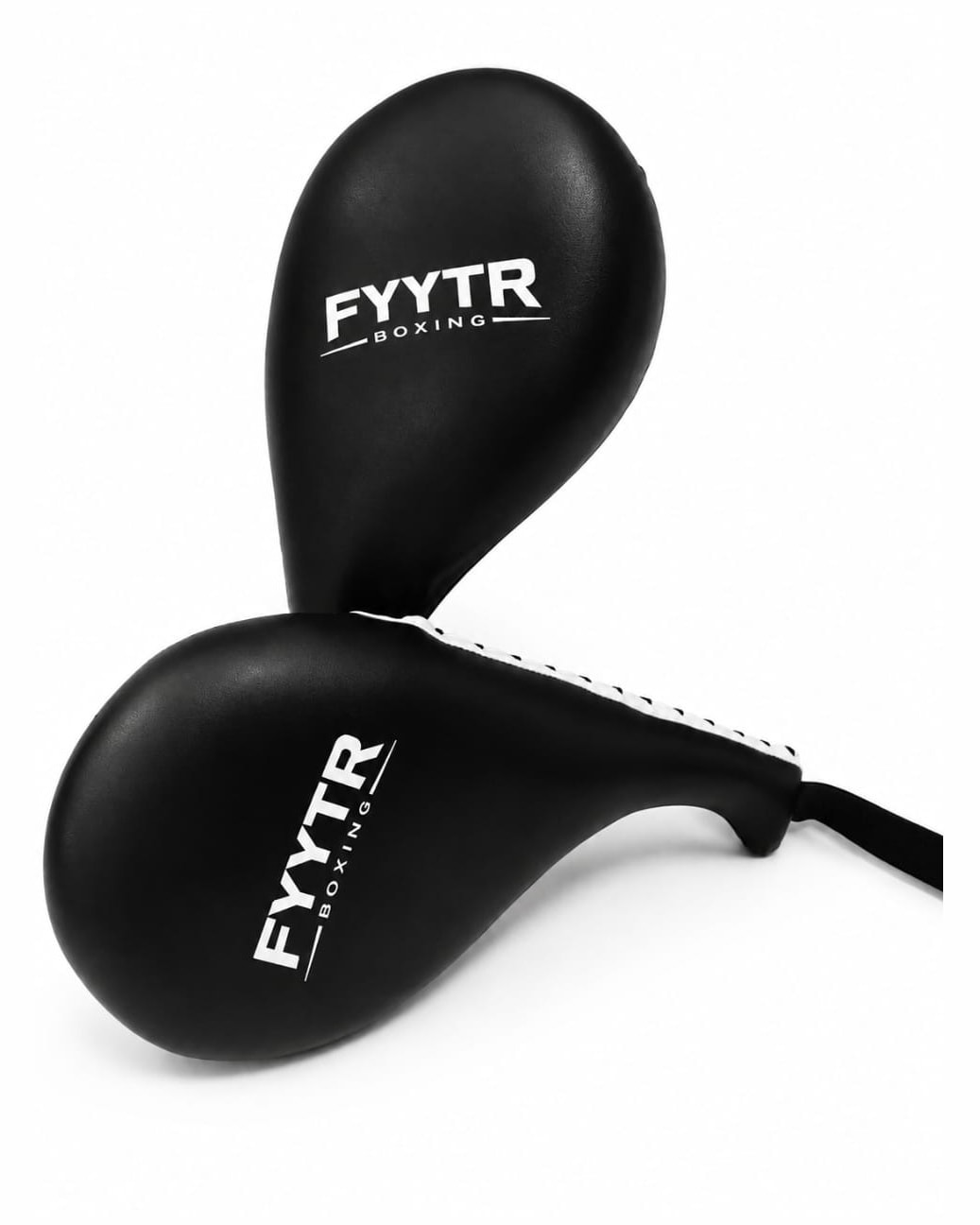
Murabbi Pro Trainer focus pads, AED 189, absorb full power combinations. For faster accuracy and reaction work, Murabbi coaching paddles at AED 199 are lighter to hold and quicker to position. Which to use for which drill is explained in focus pads or punch paddles. The holder should call the combination before it starts, not during, so you throw on the call rather than chase the pads.
What mistakes do beginners make with combinations?
Four come up in almost every beginner class.
- Dropping the hand that is not punching. When the right hand throws, the left drops to the waist. Keep the non-punching glove against your cheek.
- Loading up on the last punch. Winding back before the final hook telegraphs it. Every punch should start from the guard.
- Leaning in. Reaching with the head to find range tips you off balance. Step in with the feet instead.
- Standing still after the combination. Once you finish, move your head or step out. Standing in front of an opponent is where you get countered.
A coach will correct these in the first weeks. If you are training alone, film a round on your phone. It is uncomfortable to watch and more useful than any article.
When should you add defence to combinations?
As soon as the six basic combinations are clean.
The simplest step is to finish every combination with a defensive movement: a slip to the side after the 1 2, or a roll under an imaginary hook after the 1 2 3. That turns combinations from something you throw into something you throw and leave safely.
If you are building a routine from scratch, the four week boxing plan for beginners sets out when to introduce each skill, and your first boxing class covers what a coach will expect on day one.
Common questions
The jab, the cross, the lead hook, the rear hook, the lead uppercut and the rear uppercut. Most gyms number them one to six in that order.
A jab, a cross and a lead hook thrown as one combination. For an orthodox boxer that is left jab, right cross, left hook.
The 1 2, a jab followed by a cross. Almost every other combination is built on it, and it teaches you to turn the back foot and return the hands to your guard.
Most beginners can throw basic combinations cleanly within a few weeks of regular training. Throwing them with balance, power and defence takes months of repetition.
The numbers stay the same, but the hands swap. For a southpaw, the 1 is a right jab and the 2 is a left cross.
Shop the kit


Keep reading
Technique4 min read
Boxing Footwork Drills You Can Do Anywhere
The boxing stance, the four basic steps and the pivot, plus five footwork drills that need only floor space, and how often a beginner should practise them.
Technique4 min read
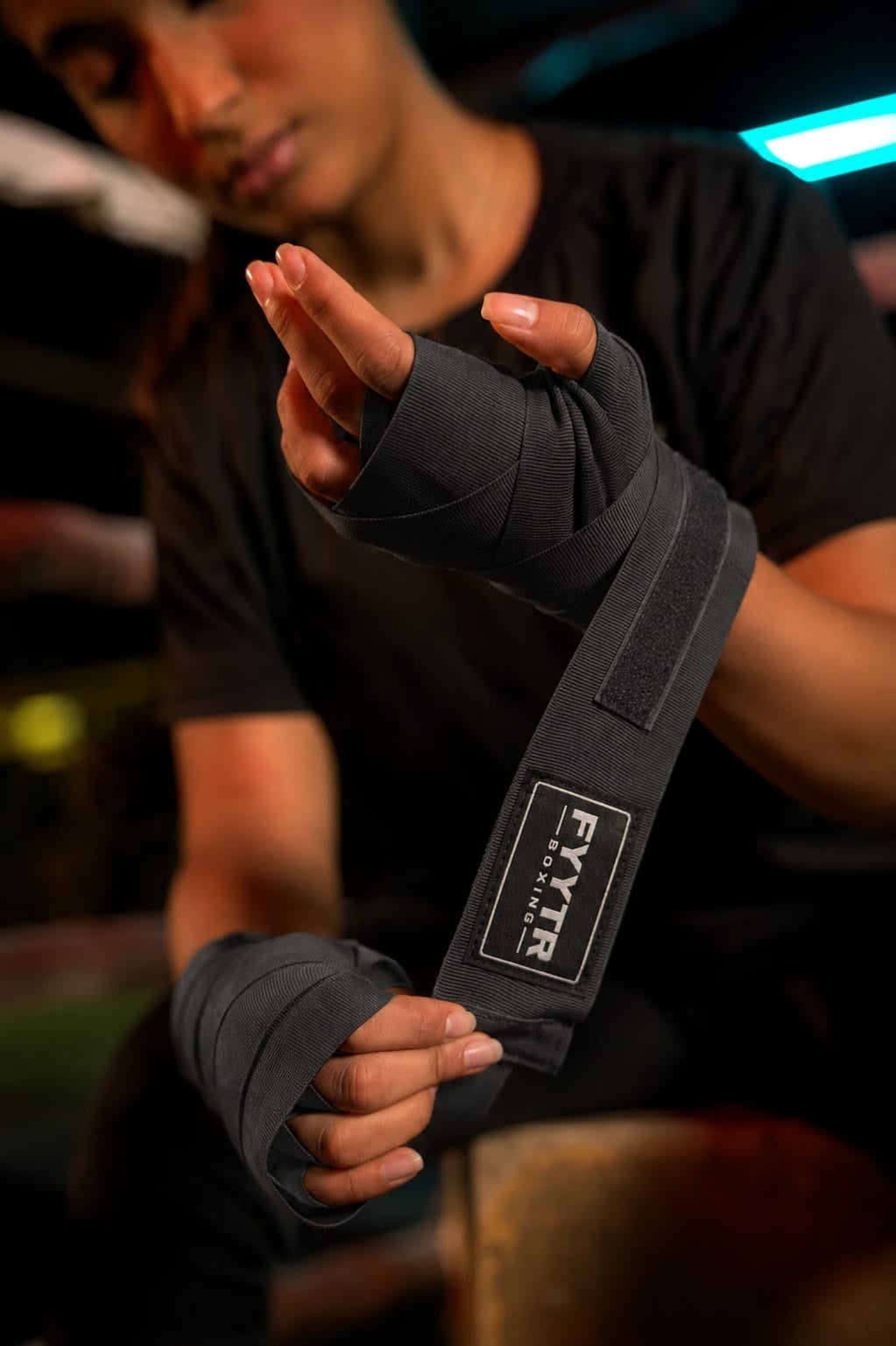
How to Wrap Your Hands for Boxing
A step-by-step wrap that holds for a full session, plus the 120 vs 180 inch question answered and the three mistakes that make wraps useless.
Gear guides4 min read
Boxing Equipment Prices in the UAE: What to Pay
What boxing gloves, wraps, headguards and pads really cost in the UAE, where the money goes, and three honest kit budgets from AED 348 to about AED 1,000.