Training
A Four Week Boxing Plan for Complete Beginners
Three sessions a week, no sparring, no gym membership needed for the first fortnight. What to do each week and what to stop doing when it hurts.
3 min read
Three sessions a week, an hour each, with a rest day between them. That is the plan, and the reason it is three rather than five is that boxing loads wrists, shoulders and calves in ways nothing else does, and those adapt slower than your lungs.
For the first two weeks you need no equipment and no gym. Floor space, a timer and somewhere to stand.
Week one: stance and moving
Three sessions, twenty to thirty minutes each. Do not hit anything yet.
Each session: five minutes of skipping or marching on the spot to warm up, then fifteen minutes working orthodox or southpaw stance and moving in all four directions. Step and slide, never crossing your feet. Finish with five minutes of stretching through the hips and shoulders.
It will feel like you are wasting time. You are not. Everyone who looks good boxing looks good because of their feet, and every beginner who skips this spends a year fixing it later.
Nothing to buy this week. If you want something to do while you learn, boxing at home covers what genuinely works without a bag.
Week two: the two punches that matter
Same three sessions, same warm-up, but now add the jab and the cross into your shadow boxing.
That is the entire punching syllabus for week two. Not the hook, not the uppercut. The jab is the punch you will throw more than every other punch combined, and the cross is the one that follows it.
Three rounds of three minutes shadow boxing, one minute rest between them, thinking about one thing per round: round one, the jab returns to your chin. Round two, the cross turns from the back foot. Round three, keep moving between punches.
By the end of this week, book a class. You have reached the limit of what you can teach yourself.
Week three: into a gym
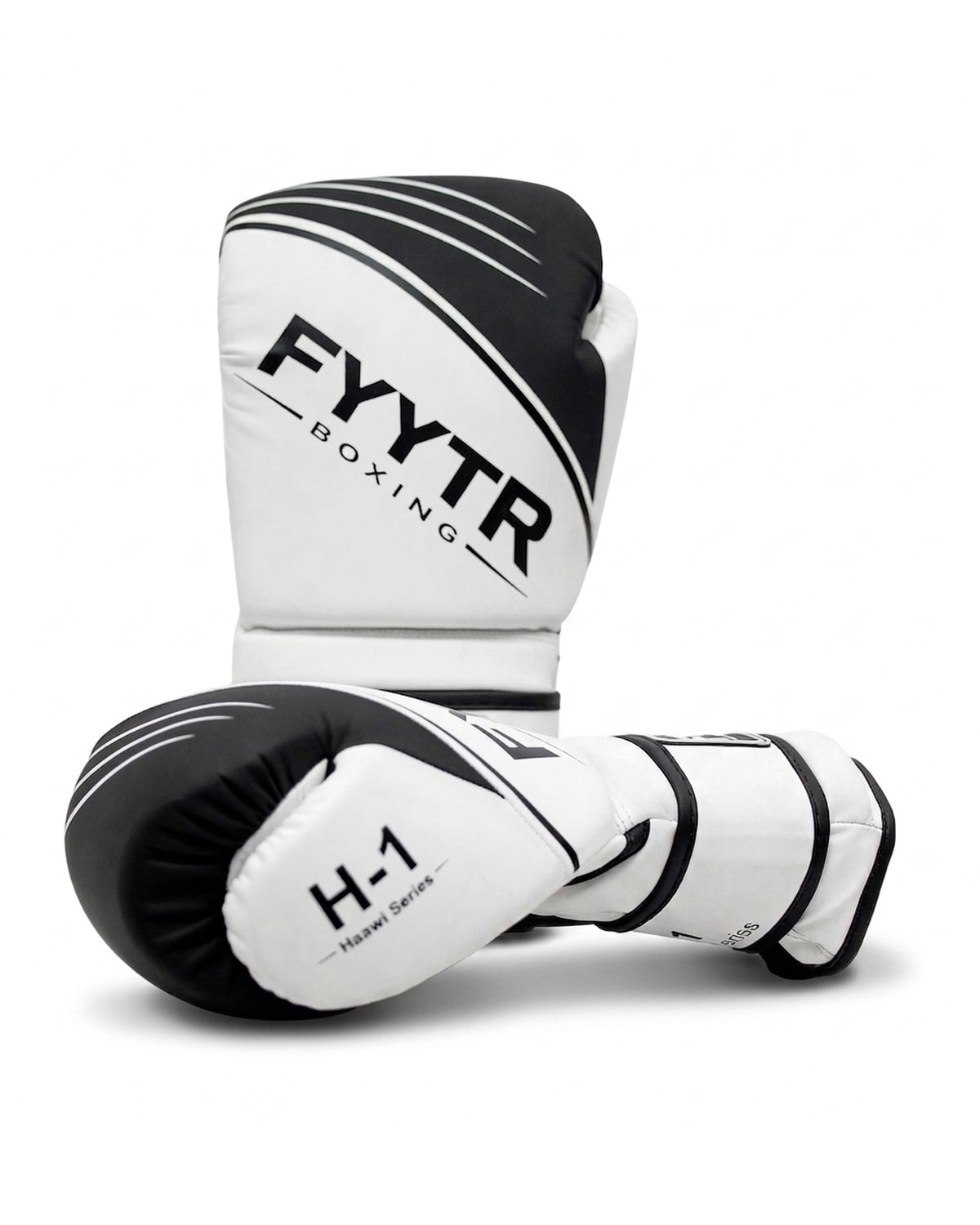
Two classes plus one solo session. This is where you need kit, and it is a short list: gloves and hand wraps at AED 49.
The Haawi H-1 at AED 199 in 14oz covers most adults for everything you will do this year. If you are unsure, what oz boxing gloves should you buy sizes it by body weight.
Learn to wrap before your first class rather than in the changing room. How to wrap your hands has the sequence.
Expect the first class to be humbling and expect your calves to hurt for two days. Both are normal.
Week four: volume, not intensity
Three gym sessions. The temptation now is to hit harder. Do not. Hit more, and hit correctly.
Your wrists are the weak link at this stage and hard punching with an unset wrist is how beginners lose a month. Power comes from the floor and arrives around month four without you chasing it.
Add one conditioning element: three rounds of skipping at the end of each session. It is the most boxing-specific conditioning there is and it costs nothing.
What to stop doing
Stop if your wrist hurts on contact rather than after. That is a technique problem or a wrapping problem and training through it makes it worse.
Stop adding sessions. Four a week at week four is how people end up with shin splints and shoulder impingement, and the recovery costs more time than the extra sessions bought.
And stop watching technique videos for punches you have not been taught yet. The gap between beginner and intermediate is not knowing more punches. It is throwing the two you already know without thinking about them.
What to wear while you do all this, in this climate, is in what to wear for boxing training.
Common questions
Three. Two is enough to progress slowly, four is enough to get injured before your joints have adapted. Three sessions with a rest day between each is the sweet spot for the first couple of months.
Not for the first two weeks. Stance, footwork and shadow boxing need floor space and nothing else. You need a gym once you want someone to correct you, which is sooner than most people think.
Cardio improves inside three weeks. Technique takes months. The honest marker is that around week six most people stop thinking about their feet, and that is when it starts being enjoyable.
Shop the kit


Keep reading
Training2 min read
How to Start Amateur Boxing in the UAE
What it takes to go from training to competing in the UAE: the club route, the medical, the kit that gets checked, and roughly how long it takes.
Training3 min read
Boxing in Sharjah and the Northern Emirates
Sharjah, Ajman and Ras Al Khaimah have a real boxing scene and lower prices than Dubai. What to look for, what it costs, and how to pick a club.

Training2 min read
Boxing, Kickboxing or Muay Thai: Which to Start?
Three different sports that look similar from outside. What each one actually trains, what kit you need for each, and which suits what you want out of it.