Gear guides
What Oz Boxing Gloves Should You Buy?
14oz for general training, 16oz for sparring, 12oz for pads. What the ounces actually measure, and how to pick a weight you will still use next year.
5 min read
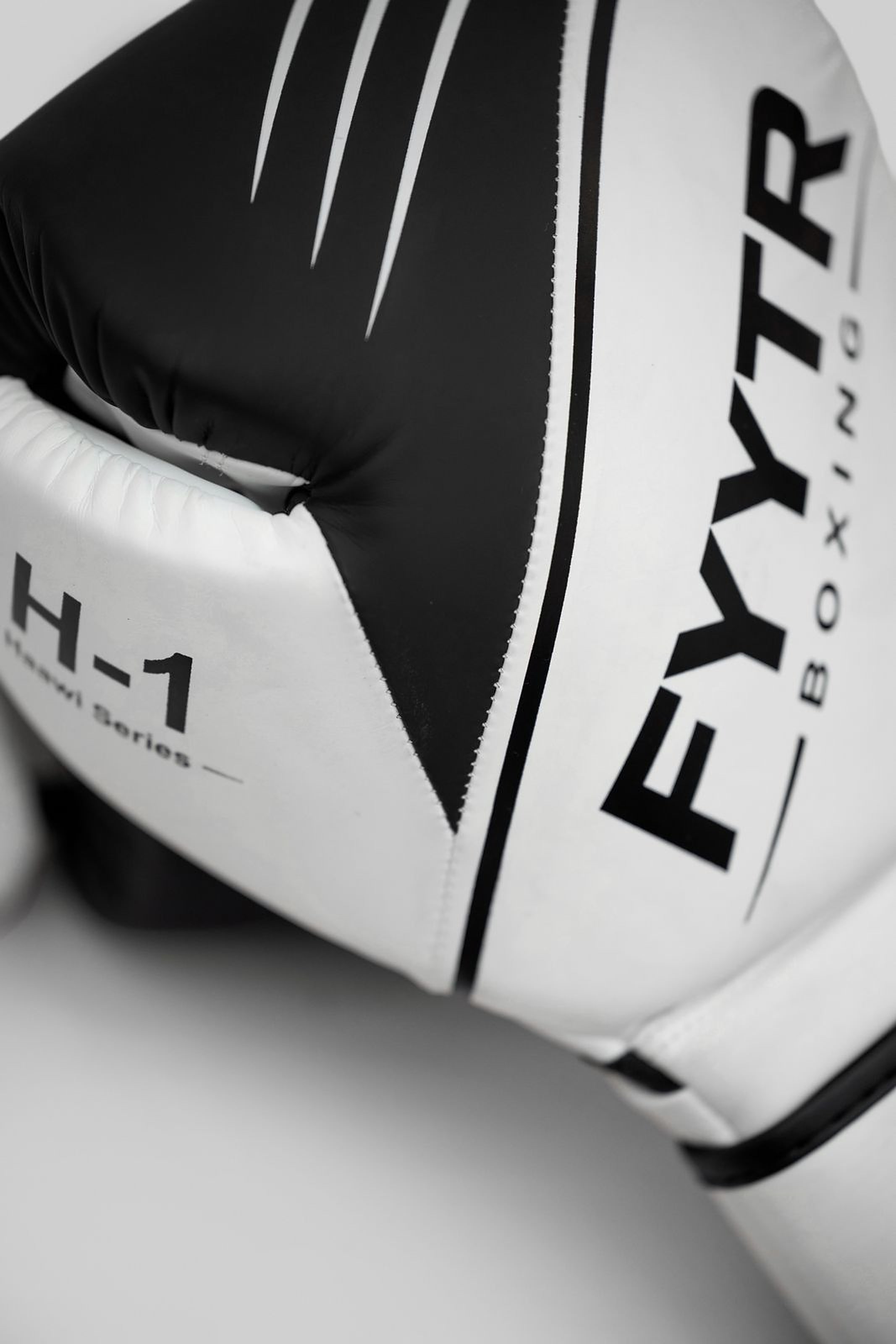
If you want the answer without the reasoning: 14oz for general boxing training, 16oz if you spar regularly, 12oz only if you are doing fitness classes and pad work and nothing else. If you are buying one pair and you are not sure what your training will look like in six months, buy 14oz.
The rest of this explains why, because the number on the glove is the single most misunderstood thing in boxing kit.
What the ounces actually measure
The "oz" on a boxing glove is the weight of the glove itself, not the size of your hand and not how hard it hits. A 16oz glove weighs sixteen ounces, roughly 450 grams, and almost all of the difference between a 12oz and a 16oz glove is foam.
That foam sits between your knuckles and whatever you are hitting. More of it means the force of a punch is spread over a wider area and a longer moment, which is better for the person being hit and better for the small bones in your own hand.
This is why gyms set minimum glove weights for sparring. It is a padding rule, not a fairness rule.
The short answer by what you actually do
| What you do | Weight | Why |
|---|---|---|
| Fitness classes, pad work only | 12oz | Light on the arms through a fast class, enough padding for mitts |
| General boxing training, bag and pads | 14oz | The default. Enough for everything short of hard sparring |
| Regular sparring | 16oz | What most gyms require, and what protects your partner |
| Under 60kg, technical work | 12oz to 14oz | Lighter frames do not need as much glove |
| Over 90kg, or heavy hands | 16oz | More mass behind the punch needs more foam in front of it |
If two lines apply to you, take the heavier one. Nobody has ever been injured by too much padding.
Do heavier gloves hit harder?
No, and this is worth being blunt about because the opposite belief is common.
A heavier glove does not transfer more force to your opponent. It spreads the same force over more surface and more time, which reduces the peak impact. Choosing 16oz over 12oz is a decision about safety, not about power. As FightCamp puts it, the extra weight is about protecting you and your partner rather than inflicting damage.
What heavier gloves do change is your arms. Carrying an extra 115 grams per hand through a twelve round bag session is real fatigue, and that is the honest argument for training in 14oz and sparring in 16oz rather than living in one pair.
Bodyweight matters more than hand size
People instinctively size gloves like shoes, looking for the pair that fits their hand. Hand size does matter, but it decides the fit inside the glove, not the ounce rating.
The ounce rating tracks your bodyweight, because bodyweight is what is behind the punch. A 55kg athlete in 16oz gloves is wearing gloves that feel enormous and slow their hands down for no protective gain. A 95kg athlete in 12oz gloves is under-padded no matter how comfortable it feels.
If you are between two weights, your training frequency breaks the tie. Someone boxing four times a week takes more cumulative hand impact in a month than someone going once, and should size up.
If you can only buy one pair
Buy 14oz, and buy leather rather than synthetic.
One pair of 14oz gloves covers bag work, pad work, drills and light controlled sparring. That is the whole first year for most people. The pair you will regret is 10oz or 12oz bought because it felt fast in the shop, then outgrown the moment you start sparring.
On material: synthetic gloves are cheaper and they are fine for a few months of fitness classes. Leather holds its shape as the foam compresses, breathes better, and survives sweat. The cost difference disappears once you have replaced a synthetic pair twice.
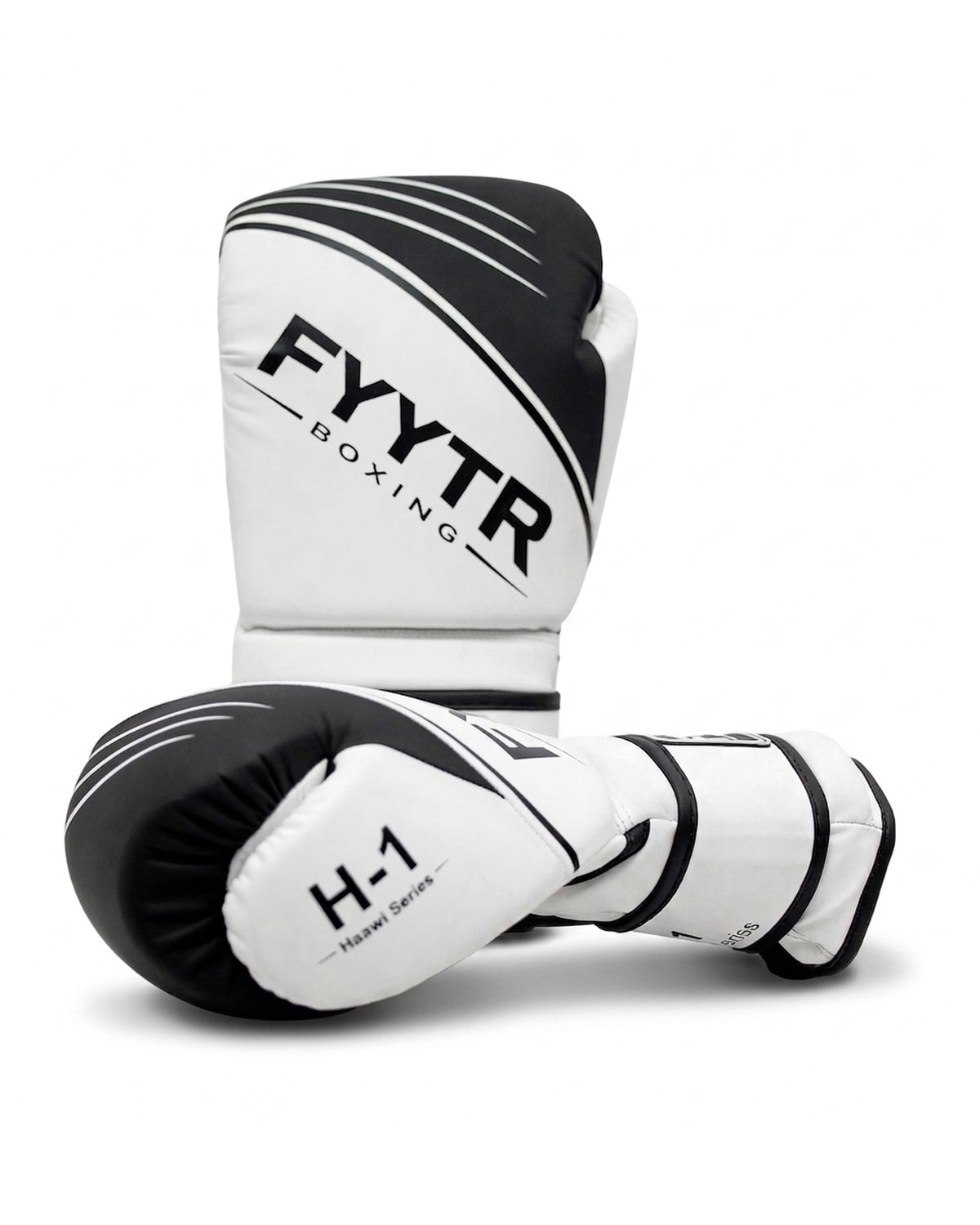
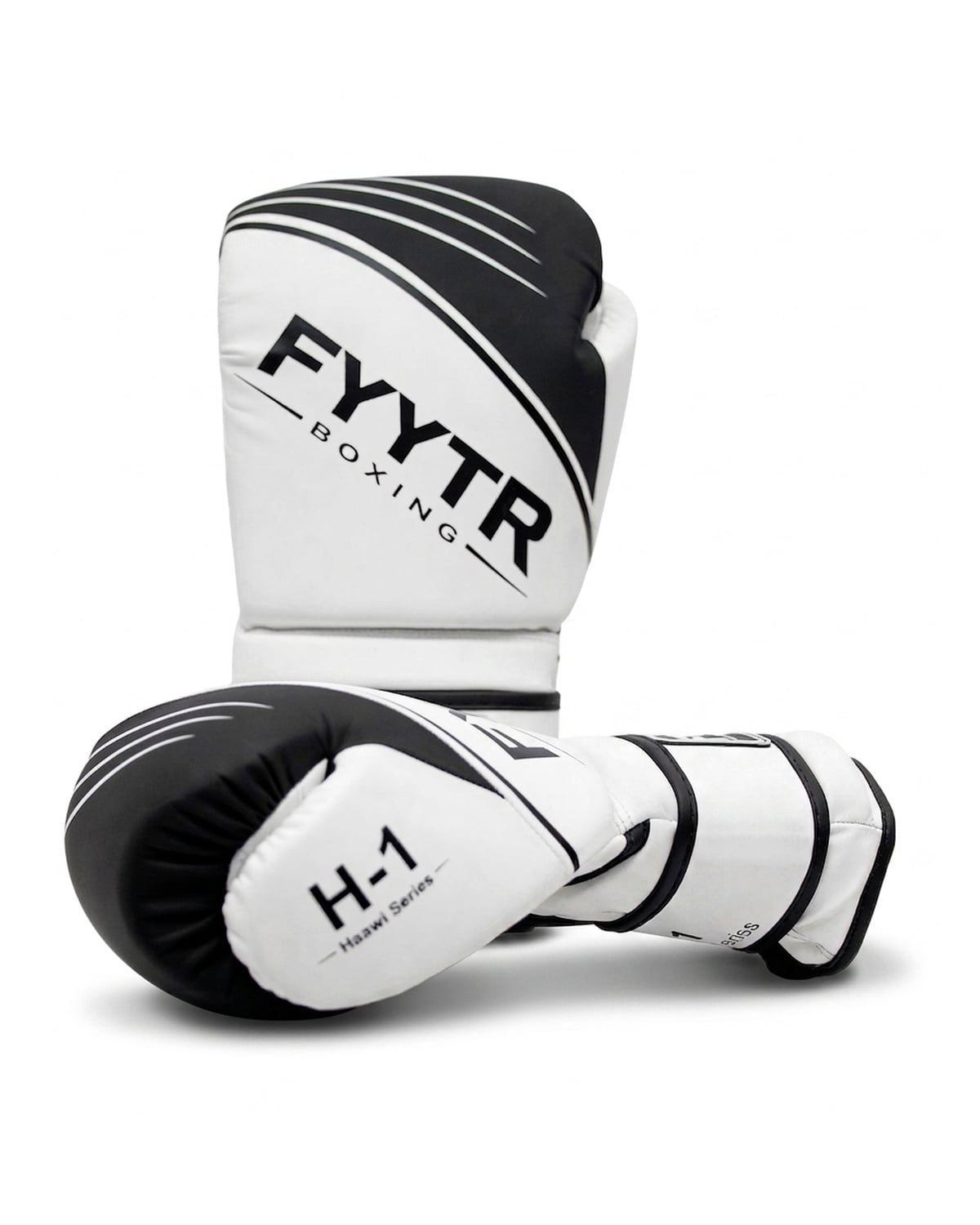
Our Haawi H-1 training gloves are AED 199 and built for exactly this: the everyday pair you train in. The Mulakim M-1 at AED 379 is premium leather for people training seriously and often enough to notice the difference.
Training in the UAE: the drying problem
This is the part most glove guides written for cooler climates leave out.
Gloves in the Gulf do not fail from punching. They fail from moisture. Between summer humidity and air-conditioned gyms, a pair of gloves that goes into a closed bag after a session stays wet, and wet foam breaks down faster and smells within weeks.
Three habits extend a glove's life more than anything you can buy:
- Take them out of the bag the moment you get home, every time
- Open them fully and let air reach the inside, never in direct sun
- Wear hand wraps every session, because the wrap absorbs the sweat instead of the glove lining
Wraps are AED 49 and they are the cheapest thing you can do to protect a AED 199 pair of gloves. Most people who complain their gloves died in a year were training without them.
How to check the fit before you commit
Weight is the first decision. Fit is the second, and it is quick to test.
Put your wraps on first, then the glove. Make a hard fist and hold it for twenty seconds. Your fingertips should reach the end of the padding without curling into it, and your knuckles should sit flat across the padded face rather than bunching to one side. The wrist strap should close firmly with room left over, not at its very last position.
If your fingertips go numb, there is too much wrap bulk or the glove is too small. If your hand slides forward inside the glove when you punch, it is too big and your wrist will pay for it.
Do this test before the first session, not after.
Weight is only half the question. What the glove is built for is the other half, and it changes what weight you want: sparring gloves vs bag gloves.
Common questions
14oz suits most adults starting boxing. It carries enough padding for bag work and pads, and enough for light sparring once you get there, so you are not buying a second pair three months in.
No. A heavier glove holds more padding, which spreads the impact across a wider area. Heavier gloves protect both people. They do not increase the force you deliver.
No, they are sized by weight in ounces. Hand size affects the fit inside the glove, but the ounce rating is about how much padding sits over your knuckles.
Yes, and many people do. They are heavier on the arms over a long session, which is why some prefer 14oz for bag work, but there is no safety reason to avoid them.
Training three times a week, a well-made leather pair lasts two to four years. Foam compression, not the outer material, is usually what ends a glove's life.
Shop the kit


Keep reading
Gear guides3 min read
Where to Buy Boxing Equipment in Dubai
The three places Dubai actually sells boxing gear, what each one is good for, how to size gloves without trying them on, and what to buy first.
Gear guides3 min read
Boxing Equipment for Gyms and Clubs in the UAE
What a boxing class actually gets through, how many gloves and pads a 12 person session needs, replacement cycles, and how to buy for a gym rather than a person.
Gear guides3 min read
Haawi H-1 or Mulakim M-1: Which Glove?
The honest comparison of FYYTR's two training gloves: what each is built from, who each suits, and why training volume decides it rather than price.