Gear guides
Gym Clothes for UAE Heat: What Actually Works
Why cotton fails in Gulf humidity, which fabrics actually move sweat, how to dress for outdoor training in summer, and how to stop kit smelling after two washes.
5 min read
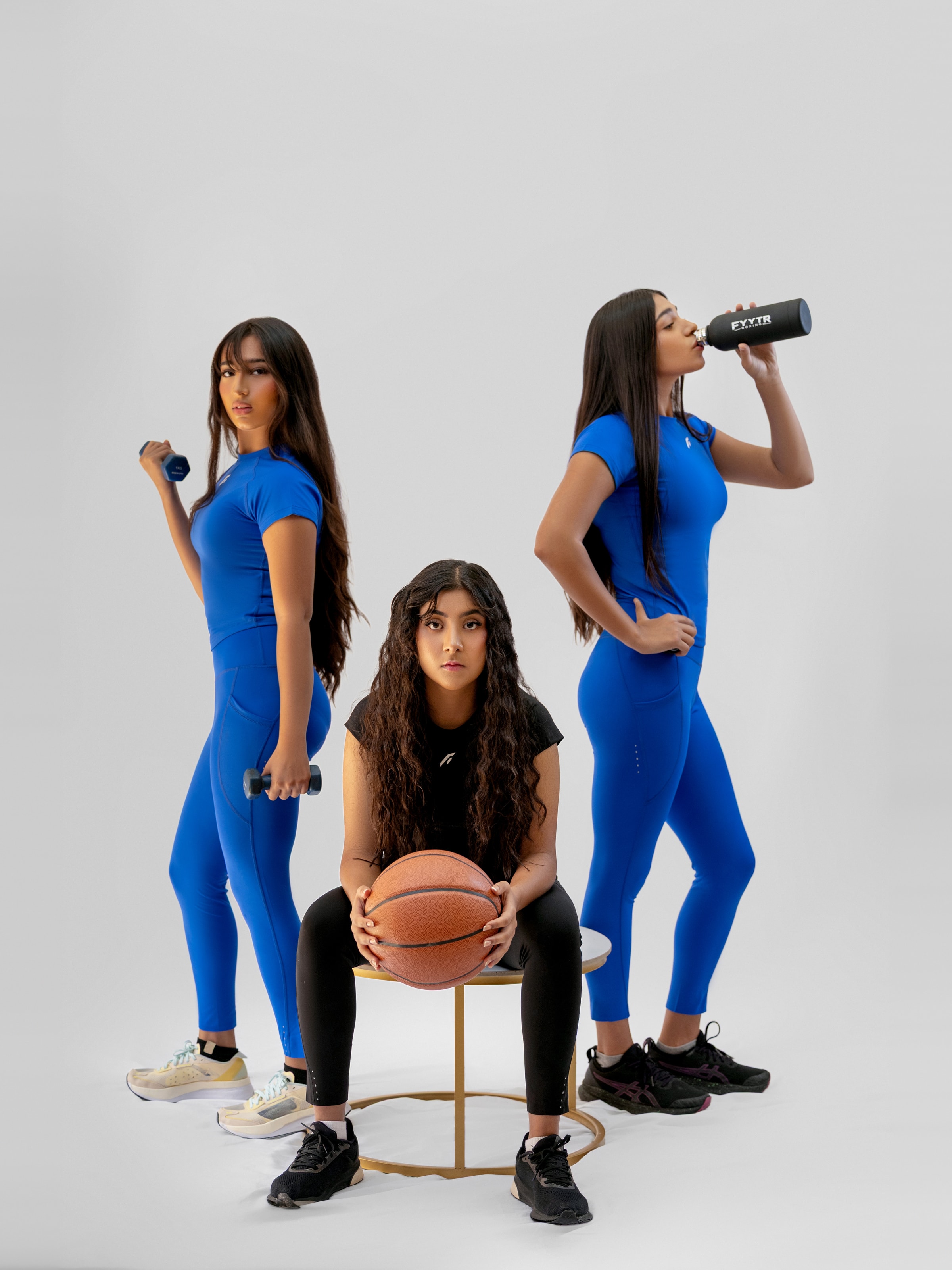
In Gulf humidity your sweat cannot evaporate efficiently, so the job of the fabric changes: it has to move moisture away from your skin and spread it thin enough to dry. That means light synthetic knits, mesh panels and looser cuts outdoors. Cotton is the single worst choice, and it is what most people wear.
This is what actually works between May and September here, indoors and out.
Why does cotton fail in this climate?
Because it absorbs sweat instead of moving it.
Cotton fibre holds up to about 25 times its weight in water. In a dry climate that is survivable, since the moisture eventually evaporates off the fabric surface. In Dubai in August, with humidity often above 60 percent, there is very little evaporative capacity in the air to pull it away.
So the shirt takes on your sweat, gets heavy, sticks, and stays wet for the rest of the session and the drive home. It also gets cold and clammy the moment you walk into air conditioning, which is the specific misery of a UAE gym in summer.
Synthetic knits do the opposite. The fibre itself absorbs almost nothing, so sweat travels along the surface of the yarn and spreads across a wider area, where even limited airflow can dry it. That is the whole mechanism, and it is why a AED 129 technical tee outperforms a cotton one every time.
What should you actually wear indoors?
Fitted and light, because the air conditioning does the cooling and the fabric only has to stay out of the way.
Indoors the airflow problem is mostly solved for you. What matters is that the fabric is thin, breathes, and does not cling once it is wet. A Breeze Tee at AED 129 or an Alpha Tank at AED 129 both do this, and the tank wins on the hottest days simply by removing sleeves from the equation.
For bottoms, mesh panelling earns its place. Aero Mesh Shorts at AED 149 vent where you actually generate heat rather than being uniformly thin everywhere, which is what keeps them from going transparent when they get wet.
The one thing to avoid indoors is heavy loose cotton, and the second is anything with a rubberised print across the chest. A large solid print is a panel of plastic that does not breathe at all.
What changes for outdoor training?
Coverage beats exposure, which surprises people every time.
Training outdoors between June and September means direct sun is a bigger load than air temperature. Bare skin absorbs it. A light, loose long sleeve in a woven synthetic reflects some, shades the rest, and lets air move underneath, and it will usually feel cooler than a vest despite covering more.
Go looser than you would indoors. Outdoors you are relying on air movement rather than a cooling system, and a fitted top pressed against your skin blocks the little airflow there is.
Train at the edges of the day. Between 11am and 4pm in July, no fabric choice makes outdoor training sensible. Early morning is the honest answer, and it is what most people here settle into.
Does dark clothing make it worse?
Slightly, and less than the internet suggests.
Dark fabric absorbs more solar radiation, so in direct sun a black shirt does run hotter than a white one. The difference is real but small compared to two other factors: whether the fabric breathes, and whether it is covering your skin from the sun at all.
The order that actually matters is fabric first, fit second, colour third. A light coloured cotton shirt will beat you up more than a black technical one.
Indoors, where there is no sun load, colour makes no difference to temperature at all. The only practical consideration is that pale fabric shows sweat and dark fabric shows salt marks after it dries.
How do you stop kit from smelling?
Wash it the same day, cold, and never use fabric softener.
The smell in gym clothes is bacteria feeding on the residue left in fabric, not the sweat itself. Two habits cause almost all of it. Leaving damp kit balled in a bag until the next day gives bacteria hours of warmth and moisture. Fabric softener leaves a waxy coating on synthetic fibres that traps residue and stops detergent reaching it, which is why softened technical fabric gets progressively worse.
Get it out of the bag when you get home, wash on cold with normal detergent, and hang dry rather than tumble. Heat sets odour into synthetics and shortens the life of any elastane in the waistband.
If a garment has already gone sour, a soak in a cup of white vinegar and cold water for an hour before a normal wash usually resets it. The same principle applies to boxing gear, covered in how to clean boxing gear.
What about sweat itself?
Carry a towel and drink more than feels necessary.
In this climate people routinely lose over a litre of fluid in an hour of hard training. Thirst lags behind that, so drinking to thirst leaves you slightly behind for the whole session. Drink before you start, not just during.
A towel is not a luxury here. It keeps sweat off shared equipment, off your face during a set, and off the floor around you. A pack of two performance towels at AED 49 means one is always clean and in the bag.
Salt matters too across a long summer of training. If you are training daily and cramping, that is usually electrolytes rather than fluid volume.
A summer kit that works
- Indoors: Breeze Tee or Alpha Tank at AED 129, Aero Mesh Shorts at AED 149.
- Outdoors: the loosest light long sleeve you own, early morning only, and double the water.
- Always: two sweat towels at AED 49, and nothing cotton in the bag.
That is roughly AED 330 for a rotation of two, which clears free UAE shipping. If you are dressing specifically for boxing rather than general training, the cut matters differently and what to wear for boxing training covers it.
Common questions
A light polyester or nylon knit with a mesh or open structure. It moves sweat to the surface where it can evaporate. Cotton absorbs and holds it, which is why a cotton shirt stays heavy for the whole session.
Loose for outdoor training where airflow does the cooling, fitted for indoor and combat sports where loose fabric gets in the way. Fitted only overheats you if the fabric cannot breathe.
For training, yes. In high humidity the sweat has nowhere to evaporate to, so a cotton shirt becomes waterlogged and stays that way. Cotton is fine for the walk in and the coffee after.
Wash them the same day, cold, without fabric softener. Softener coats synthetic fibres and traps the bacteria that cause the smell, which is why softened kit gets worse over time rather than better.
Light colours reflect more heat, but coverage matters more than colour. A light long sleeve keeps direct sun off your skin and usually feels cooler than a dark vest.
Shop the kit


Keep reading
Gear guides3 min read
Boxing Gear for Women: What Actually Fits
Glove sizing by hand rather than by label, wraps that are not too long, and what to wear in a UAE gym. Written for people the standard sizing does not fit.
Gear guides3 min read
Boxing Mouthguards: How to Choose and Fit One
A boil-and-bite mouthguard fitted properly protects better than an expensive one fitted badly. How to pick, how to mould it, and when to replace it.
Gear guides2 min read
Gifts for Boxers: What They Actually Want
Ideas from AED 49 to AED 379, sorted by what someone who trains will genuinely use. Written by people who watch this gear come back for repairs.