Gear guides
Boxing Headgear: How to Choose, Fit and Use It
What headgear protects against, what it does not, how it should fit, and when a beginner actually needs to buy a headguard. Plus where the rules stand now.
4 min read
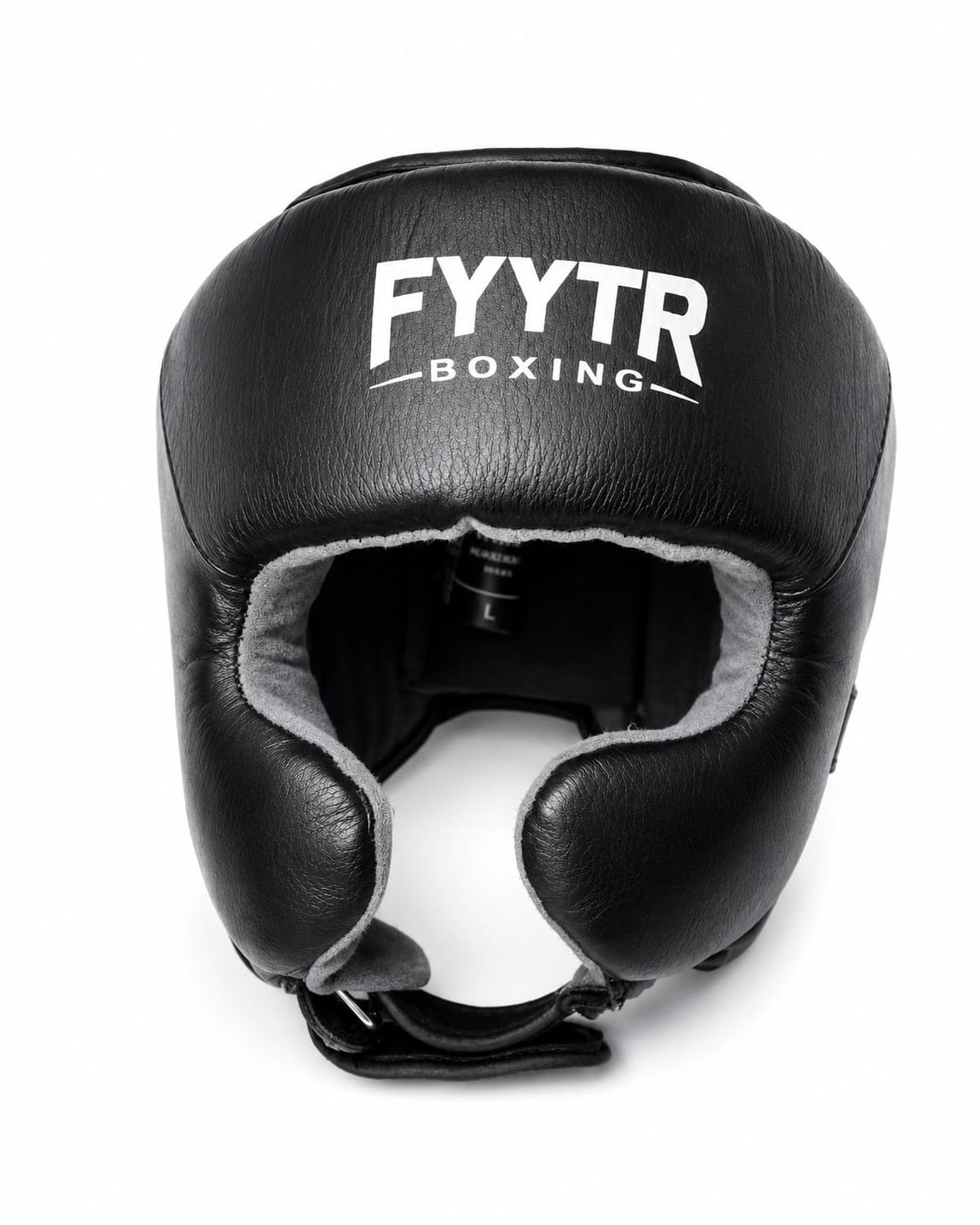
Headgear protects your face, not your brain. It reduces cuts, swelling and surface impact, and it does not prevent concussion, because nothing worn outside the skull stops the brain moving inside it. Understanding that one distinction changes how you buy it and how you spar in it.
If you are a beginner: you do not need headgear yet. Buy it the week your coach tells you sparring is next.
What does headgear actually do?
It spreads and absorbs impact across the surface of your head, and it covers the parts that split.
The practical benefits are real and worth having. Cuts around the eyebrow and cheekbone are the injuries that end training blocks and leave marks that follow you to work on Monday. Swelling closes eyes and shortens sessions. Headgear substantially reduces both, which is why it remains standard in gym sparring almost everywhere.
What it does not do is change the physics of acceleration. A punch that rotates your head rotates your brain with it, padded or not. Published reviews of headgear in amateur boxing set out this distinction, and it is the reason the rules moved the way they did.
Why did the Olympics remove headgear?
Because the data suggested it was not helping with the injury that matters most.
Governing bodies removed headgear for elite men's competition from the 2016 Games, following medical advice that its use was associated with more concussions rather than fewer. Two mechanisms get cited: a false sense of security that changes how boxers accept punches, and reduced peripheral vision that means more shots land clean.
It stayed compulsory in women's and youth competition, and the debate has not settled. World Boxing has since proposed restoring mandatory head protection, so the picture may change again.
None of this transfers neatly to gym sparring. In competition you are trying to win. In sparring you are trying to arrive at work uncut on Monday, and headgear serves that goal well.
How should headgear fit?
Snug, level, and completely clear of your eyeline. Check all four:
- Shake test. Fasten it, then shake your head hard. Nothing should shift. Movement on impact is what turns a headguard into a blindfold.
- Eyeline. Look straight ahead, then up. The padding should sit above your brow without entering your vision. Headgear that rides down is the most common cause of shots people never see.
- Ears. Your ears sit in the openings, not under the padding. Folded ears hurt within one round and affect balance.
- Chin strap. Firm enough to stop rotation, loose enough that you can open your mouth around a gum shield.
Sizing runs small to large by head circumference. Measure around the widest part of your head, just above the ears, and buy to the measurement rather than to your hat size.
Open face or full protection?
Open face for learning, cheek protection for hard or frequent sparring.
Open face leaves your cheekbones and jawline exposed. You see punches clearly, which means you learn to slip them, and you get honest feedback about what is landing. This is the right choice for most people most of the time. The Mulakim M-1 open face headguard is AED 279.
Cheek protection extends forward over the cheekbones. You trade some peripheral vision for real cover where cuts and swelling actually happen. Worth it if you spar hard, spar often, or have a fight coming. The Mulakim M-1 full protection headguard is AED 299.
We go deeper into the trade-off in open face or full protection headgear.
What should a headguard cost?
| Price band | What you get |
|---|---|
| Under AED 120 | Thin foam, fabric shell, slides within weeks |
| AED 250 to 350 | Leather shell, layered foam, holds shape and position |
| Above AED 400 | Competition spec, custom sizing |
The cheap band is a genuine false economy here, more than with gloves. Compressed foam headgear that slides is worse than none at all, because it blocks vision while absorbing very little. If the budget is tight, train without headgear until you spar, then buy properly.
Leather matters for the same reason it matters in gloves: it holds shape as the padding ages, and it survives sweat. Mulakim is the Arabic word for boxer, and both our headguards are built in full leather for that reason.
When should a beginner buy one?
When sparring is actually scheduled, and not before.
Most people do not spar for several months. Bag work, pad work and drills carry the first phase entirely, and none of it involves getting hit. Buying headgear in week one means it sits in a bag compressing under other kit until you need it.
The order that makes sense is hand wraps first, then gloves, then a gum shield, then headgear when your coach raises sparring. Our beginner equipment guide sets out the full sequence and what it costs.
Using it well
Headgear is not a licence to take shots. The boxers who get hurt in sparring are usually the ones who stopped moving their head because they felt protected.
Spar with partners who control their power, agree the intensity before you start, and stop when you are tired rather than when the round ends. Wipe the inside down after every session, because sweat in the lining breaks the foam down the same way it does in gloves, and let it dry out of the bag.
Replace it when the padding stops springing back or when it starts sliding despite a correct fit. Both are signs the foam is finished, and both arrive before the leather looks worn.
A headguard is half of the sparring kit. The other half is a mouthguard, and a cheap one fitted properly beats an expensive one fitted badly: how to fit a boxing mouthguard.
Common questions
Cuts, swelling, and surface impact to the face and scalp. It does not prevent concussion, because it cannot stop the brain moving inside the skull. Treat it as protection for your skin, not your brain.
Snug enough that it does not shift when you shake your head, with your eyeline completely clear and your ears aligned with the openings. If it moves on impact it is doing half its job.
Not until you start sparring, which for most people is several months in. Buy it when your coach says you are ready, not before.
Governing bodies removed it for elite men from 2016 after data suggested headgear was associated with more concussions, partly through a false sense of security and reduced visibility. It remains compulsory in women's and youth competition.
Around AED 250 to 350 for leather that holds its shape. Cheap foam headgear compresses quickly and starts sliding, which is worse than useless because it blocks vision without absorbing much.
Shop the kit


Keep reading

Gear guides3 min read
Boxing Gear for Women: What Actually Fits
Glove sizing by hand rather than by label, wraps that are not too long, and what to wear in a UAE gym. Written for people the standard sizing does not fit.

Gear guides3 min read
Boxing Mouthguards: How to Choose and Fit One
A boil-and-bite mouthguard fitted properly protects better than an expensive one fitted badly. How to pick, how to mould it, and when to replace it.
Gear guides2 min read
Gifts for Boxers: What They Actually Want
Ideas from AED 49 to AED 379, sorted by what someone who trains will genuinely use. Written by people who watch this gear come back for repairs.