Gear guides
Open Face or Full Protection Headgear?
Open face gives you vision and honest feedback. Cheek protection gives you cover for hard or frequent sparring. Here is how to pick between them.
4 min read
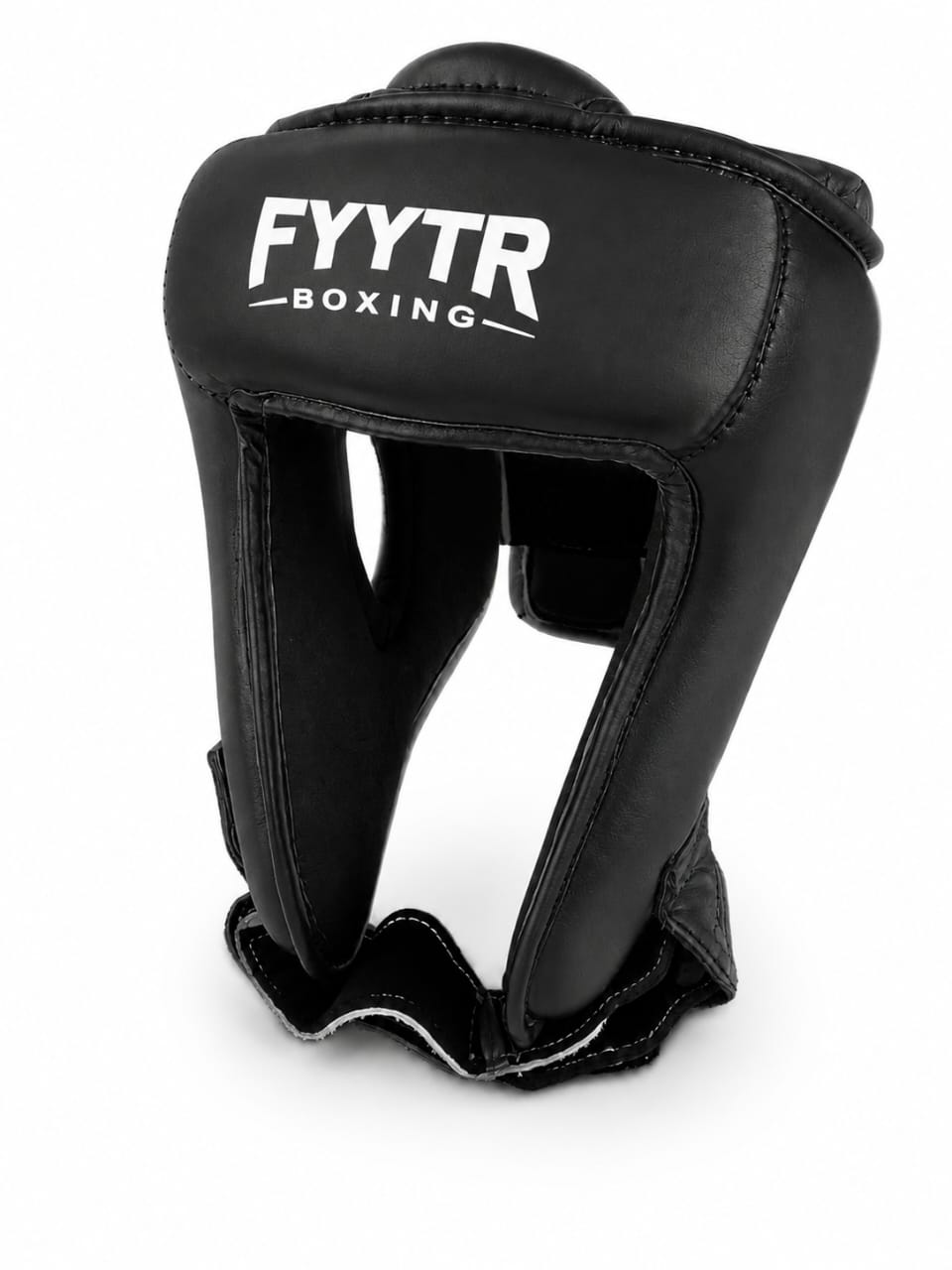
Open face if you are learning to spar and want to see what is coming. Cheek protection if you spar hard, spar often, or cannot afford to turn up to work with a swollen face. Both protect the parts of your head that take repeated impact. The difference is how much of your face they cover and how much vision you trade for it.
Most people buy the wrong one first, because they buy for the worst session they can imagine rather than the sessions they actually have.
What each one covers
| Open face | Cheek protection | |
|---|---|---|
| Top, sides, back of head | Yes | Yes |
| Cheekbones | No | Yes |
| Peripheral vision | Full | Slightly reduced |
| Nose and mouth | Exposed | Exposed |
| Best for | Learning, technical sparring | Hard sparring, frequent sparring |
| Weight on the head | Lighter | Slightly heavier |
Neither covers the nose. That is deliberate on both designs: a bar across the nose is a different category of headgear again, and it costs you significantly more vision.
The case for open face
You see more, so you learn faster.
The value of sparring is feedback. You throw, you get countered, and you find out which of your habits are expensive. Open face headgear keeps your peripheral vision intact, which means you actually see the counter that lands and can connect it to what you did wrong.
There is a second argument that experienced coaches make and beginners find uncomfortable: open face headgear gives honest feedback. When a shot lands, you feel it properly. That teaches defence faster than heavy protection does, because heavy protection lets you build habits that only work while you are wearing it.
For technical sparring, controlled work and anyone in their first year, open face is usually the better tool. Our Mulakim M-1 open face is AED 279 in premium leather.
The case for cheek protection
You spar more often, and you need your face intact tomorrow.
Cheek protectors extend forward to cover the cheekbones and the side of the face, which is exactly where cuts and swelling happen. Ringside describe the trade correctly: you give up a little peripheral vision and gain meaningful cover across the area most likely to mark.
Three situations make this the right buy:
- You spar two or more times a week and the cumulative marking adds up
- You are preparing for a fight and cannot afford a cut in the weeks before it
- Your work or life means turning up with a swollen face is a real cost
The vision reduction is genuine but smaller than people expect. It shows up in wide hooks, not in straight punches. Our Mulakim M-1 full protection is AED 299.
What headgear does not do
It does not prevent concussion. This needs saying plainly because the assumption is common and it changes how people spar.
Headgear reduces cuts, abrasions, swelling and the surface impact of a punch. It does not stop the brain moving inside the skull when the head accelerates, and that movement is the mechanism behind concussion. A padded shell around the outside cannot address it.
What does help: controlled sparring intensity, partners who respect the agreed level, stopping when you are rocked rather than proving something, and a coach who is watching. Headgear is a supplement to those, not a substitute. Anyone who spars harder because they are wearing it has made themselves less safe, not more.
Fit matters more than the model
A headguard that moves on impact protects the air next to your head.
Check three things. It should not shift when you shake your head hard, with the chin strap fastened normally rather than at maximum tension. Your eyeline should be clear when you look straight ahead and when you tuck your chin, because a guard that sits low is a guard you have to lift your head to see out of, and lifting your head is how you get hit. Your ears should align with the openings rather than being folded under padding.
Leather matters here more than on gloves. Headgear sits against your face and absorbs sweat directly, and in Gulf humidity a synthetic shell holds moisture and smell in a way that leather does not. Air it out after every session, never in direct sun.
If you are buying your first one
Buy open face, unless one of the three cheek-protection situations above already applies to you.
You will spar more carefully in it, you will see more, and you will learn faster. When your sparring gets heavier or more frequent, add the cheek protector rather than replacing the open face: most people who train seriously end up owning both and choosing by session.
If you are still assembling the rest of your kit, what you actually need to start boxing covers the order to buy in, and what oz gloves to buy covers the decision that matters more than this one.
Common questions
Open face is better for learning, because you see punches clearly and get honest feedback. Cheek protection is better for hard or frequent sparring, where cuts and swelling become the limiting factor.
No. Headgear reduces cuts, swelling and surface impact. It does not stop the brain moving inside the skull, which is what causes concussion. Controlled sparring and honest partners do more than any headguard.
Not until you start sparring, which for most people is several months in. Buy it when your coach says you are ready, not before.
Cheek protectors extend forward to cover the cheekbones while leaving the nose and mouth clear. A face saver adds a bar across the nose, trading more vision for more cover.
Snug enough that it does not move when you shake your head, with your eyeline clear and your ears aligned with the openings. If it shifts on impact it is doing half its job.
Shop the kit


Keep reading
Gear guides3 min read
Where to Buy Boxing Equipment in Dubai
The three places Dubai actually sells boxing gear, what each one is good for, how to size gloves without trying them on, and what to buy first.
Gear guides3 min read
Boxing Equipment for Gyms and Clubs in the UAE
What a boxing class actually gets through, how many gloves and pads a 12 person session needs, replacement cycles, and how to buy for a gym rather than a person.
Gear guides3 min read
Haawi H-1 or Mulakim M-1: Which Glove?
The honest comparison of FYYTR's two training gloves: what each is built from, who each suits, and why training volume decides it rather than price.